The Definitive Guide to Hybrid Engine Optimization (HEO)

Hybrid Engine Optimization (HEO) is the unified search discipline that optimizes digital assets simultaneously for traditional search engines, answer engines, and generative AI systems. It synthesizes technical crawler accessibility, entity-based knowledge graph grounding, and modular, high-information-gain content to maximize organic rankings, zero-click answer captures, and large language model citations.
Hybrid Engine Optimization
Traditional Search Engine Optimization (SEO), Answer Engine Optimization (AEO), and Generative Engine Optimization (GEO) are no longer isolated workstreams. HEO converges these three disciplines into a single strategic framework. By structuring information for indexation algorithms, natural language extraction pipelines, and retrieval-augmented generation (RAG) models, HEO guarantees enterprise discoverability across every touchpoint in modern information retrieval.

Search architecture has undergone three distinct evolutionary phases:

  • The Link-Retrieval Era (1998 to 2018): Search engines relied on inverted keyword indexes and PageRank-style link graph analysis to serve ranked lists of ten blue links.
  • The Extractive Synthesis Era (2018 to 2023): Natural Language Processing (NLP) models such as BERT and MUM enabled direct parsing of search queries to populate Featured Snippets, Knowledge Panels, and Voice Assistant answers.
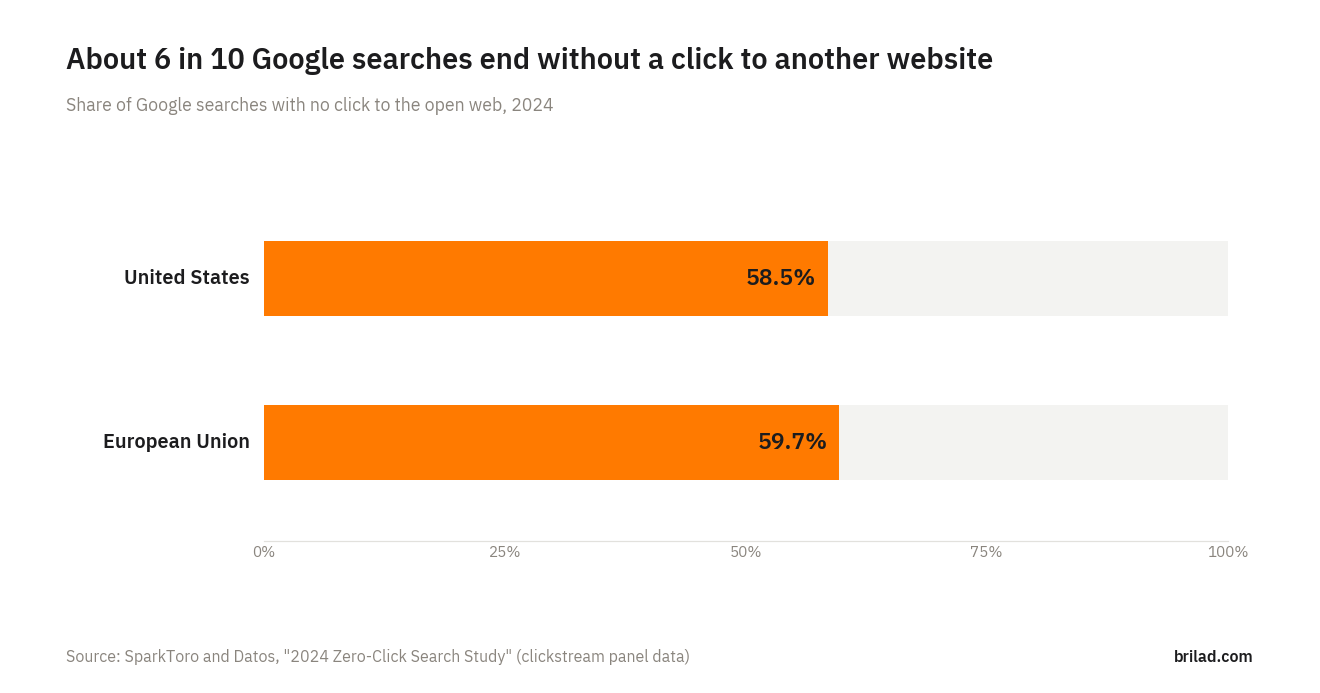
  • The Generative Retrieval Era (2023 to Present): Multi-modal Large Language Models (LLMs) and RAG engines synthesize answers on demand. Google AI Overviews, Perplexity, ChatGPT Search, Claude, and Gemini act as computational answer engines that resolve intent directly on the interface, accelerating zero-click search behavior.

Solving Acronym Fatigue: The Emergence of HEO

As AI-native search engines emerged, practitioners fractured their strategies across competing acronyms: SEO, AEO, GEO, and LLMO (Large Language Model Optimization). This fragmentation resulted in technical debt and operational silos.

Pioneered by forward-thinking search strategists such as Jori Ford, Hybrid Engine Optimization emerged to resolve this industry friction. HEO acknowledges a fundamental technical reality: generative AI engines do not replace search indexes. Instead, they ingest, crawl, index, and retrieve search data via hybrid semantic search stacks. Optimizing exclusively for one mechanism inevitably degrades visibility in the others.

Crawl Log Reality: AI Bots as the New Source of Truth

Enterprise search monitoring can no longer rely solely on Googlebot log analysis. Modern information retrieval pipelines deploy distinct bot classes that crawl the web with differing objectives:

Bot User-Agent Parent Organization Architectural Function
Googlebot Google Primary web crawler for standard index
Google-Extended Google Training data ingestion for Gemini models
GPTBot OpenAI Training ingestion and corpus building
OAI-SearchBot OpenAI Real-time search and RAG retrieval
PerplexityBot Perplexity AI Real-time indexation and source validation
ClaudeBot Anthropic Web data collection and training ingest
Bytespider ByteDance LLM training and algorithmic training

Log-file analysis reveals that AI search agents crawl pages dynamically to confirm entity veracity, fetch real-time data attributes, and extract semantic chunks before synthesizing a response. If your server architecture blocks, rate-limits, or serves broken client-side rendering (CSR) payloads to these AI user-agents, your brand is instantly erased from RAG retrieval pipelines.

The Three Converging Pillars of HEO

To understand HEO, teams must evaluate how the three foundational disciplines contrast and where their mechanics intersect.

Dimension Traditional SEO Answer Engine Optimization (AEO) Generative Engine Optimization (GEO) Hybrid Engine Optimization (HEO)
Primary Target Google, Bing, Yahoo, Yandex Google Assistant, Siri, Alexa, Featured Snippets ChatGPT, Perplexity, Claude, Gemini, AI Overviews Universal discovery engines across Web, Voice, and LLM ecosystems
Retrieval Mechanism Inverted keyword indexes, link graphs, PageRank Semantic query-matching, NLP token extraction, direct answer blocks Vector embeddings, cosine similarity, semantic search, RAG pipelines Multi-stage retrieval: Lexical indexing + Dense vector embeddings + RAG grounding
Core Metrics Organic rankings, CTR, sessions, impressions, backlinks Snippet capture rate, voice share of voice, zero-click visibility Citation frequency, model sentiment, entity co-occurrence share Blended search visibility, qualified referral traffic, brand citation share
Optimization Levers Metadata, backlink equity, site speed, keyword distribution Direct-answer formatting, Question-and-Answer schema, conversational syntax High information gain, statistical density, entity disambiguation Machine-readable architecture, unified schema graphs, high-gain modular content
Conversion Behavior Click-through to site via organic SERP links Immediate zero-click consumption or single voice direct link Multi-turn conversational research, source citation click-throughs Omnichannel touchpoint capture across conversational and traditional paths

Reinforcement Mechanics

  • Traditional SEO establishes baseline crawlability and domain authority: Without robust indexation, site architecture, and authority signals, RAG engines will not prioritize your URLs during initial candidate-set generation.
  • AEO enforces structural readability and semantic precision: Structuring data with clear headings and concise definitions allows both Googlebot and vector chunking algorithms to isolate critical answers.
  • GEO injects authority, primary data, and entity grounding: Feeding models with dense, unique facts increases the mathematical probability that an LLM assigns high generation weights to your brand during synthesis.

The 7 Core Pillars of HEO Implementation

Core Pillars of HEO Implementation

Pillar 1: Hybrid Technical Foundation

A high-performance HEO foundation ensures seamless access for classic search crawlers, real-time RAG agents, and headless browser scrapers.

1. AI Bot Crawl Control via robots.txt

Do not block all AI bots indiscriminately. Differentiate between LLM training bots (which scrape training data without sending traffic) and real-time search bots (which cite sources and drive qualified traffic).

# Allow real-time AI retrieval and search bots
User-agent: Googlebot
Allow: /

User-agent: OAI-SearchBot
Allow: /

User-agent: PerplexityBot
Allow: /

# Opt-out of passive LLM model training corpora (Optional/Strategic)
User-agent: GPTBot
Disallow: /private-data/

User-agent: Google-Extended
Disallow: /private-data/

User-agent: ClaudeBot
Disallow: /private-data/

Sitemap: https://www.yourdomain.com/sitemap.xml

2. Server-Side Rendering (SSR) and Hydration

Large Language Model search agents rarely execute client-side JavaScript due to compute costs and timeout limits. Relying on CSR frameworks (React, Vue, Angular) without SSR or pre-rendering results in AI bots parsing blank HTML documents. Implement Server-Side Rendering or Static Site Generation (SSG) to deliver complete HTML payloads immediately upon initial request.

3. Core Web Vitals and Edge Delivery

RAG pipelines require low latency when performing live web retrieval. If a page takes over 1.5 seconds to deliver Time to First Byte (TTFB), real-time search agents will time out and select a faster competing source. Deploy web assets via global edge CDNs, compress payloads with Brotli, and eliminate render-blocking resources.

4. The /llms.txt Standard

Adopt the emerging /llms.txt file standard placed in the root directory. This Markdown-based file provides a structured, lightweight index of your domain’s most critical content, brand definitions, and technical documentation, specifically formatted for fast LLM ingestion.

# YourBrand HEO Master Index
> Enterprise Cloud Security Platform and Architecture Specifications.

## Core Capabilities
- [Cloud Security Architecture](https://www.yourdomain.com/docs/cloud-security): Comprehensive guide to zero-trust cloud data isolation.
- [API Documentation](https://www.yourdomain.com/api): REST and GraphQL endpoints for automated threat mitigation.

## Research & Benchmarks
- [Annual Threat Report 2026](https://www.yourdomain.com/reports/2026-threats): Proprietary benchmark data analyzing 10M+ daily telemetry events.

Pillar 2: Entity-Based Architecture & Knowledge Graph Mapping

AI systems do not read strings of text the way legacy search engines did; they analyze entities and their semantic relationships within knowledge graphs.

  • Wikidata Alignment: Connect your brand, executives, and core products directly to Wikidata IDs. This grounds your entity in external, verified knowledge graphs utilized by Google, OpenAI, and Anthropic.
  • sameAs Schema Identity Resolution: Use the sameAs array in your Organization schema to bridge your digital presence across Crunchbase, LinkedIn, Wikipedia, GitHub, and major industry registries.
  • Topical Node Mapping: Structure your content hierarchy into distinct entity clusters. Ensure every article systematically links parent topics (e.g., Cybersecurity), child entities (e.g., Zero Trust Architecture), and associated attributes (e.g., Microsegmentation, NIST Compliance).

Pillar 3: Semantic Content Modularization

Generative search engines divide long-form documents into semantic “chunks” (typically 256 to 512 tokens) and convert them into vector embeddings. If an answer spans multiple meandering paragraphs without clear context, the vector score drops.

  • The “Question-Context-Answer” Structure: Use clear, entity-rich headings followed by an immediate direct answer (40 to 60 words), supported by structured bullet points or tables.
  • High Statistical Density: Embed specific metrics, percentages, dollar figures, and dates. LLMs prioritize sentences with high factual density over generic assertions.
  • Self-Contained Content Blocks: Write every section so it makes complete semantic sense if extracted as a standalone snippet without reading the rest of the page.

Pillar 4: Structured Data Graph Engineering

Modern search engines require deeply connected JSON-LD graph structures. Do not inject isolated schema blocks. Use an interconnected @graph schema that links the Organization, WebPage, Article, DefinedTerm, and FAQ entities into a single unified knowledge model.

<script type="application/ld+json">
{
  "@context": "https://schema.org",
  "@graph": [
    {
      "@type": "Organization",
      "@id": "https://www.yourdomain.com/#organization",
      "name": "DataCore Systems",
      "url": "https://www.yourdomain.com",
      "logo": {
        "@type": "ImageObject",
        "@id": "https://www.yourdomain.com/#logo",
        "url": "https://www.yourdomain.com/assets/logo.png",
        "caption": "DataCore Systems Logo"
      },
      "sameAs": [
        "https://www.wikidata.org/wiki/Q00000000",
        "https://www.crunchbase.com/organization/datacore-systems",
        "https://www.linkedin.com/company/datacore-systems"
      ]
    },
    {
      "@type": "WebPage",
      "@id": "https://www.yourdomain.com/heo-guide/#webpage",
      "url": "https://www.yourdomain.com/heo-guide",
      "name": "The Definitive Guide to Hybrid Engine Optimization (HEO)",
      "isPartOf": {
        "@id": "https://www.yourdomain.com/#website"
      },
      "about": {
        "@id": "https://www.yourdomain.com/heo-guide/#defined-term"
      }
    },
    {
      "@type": "Article",
      "@id": "https://www.yourdomain.com/heo-guide/#article",
      "isPartOf": {
        "@id": "https://www.yourdomain.com/heo-guide/#webpage"
      },
      "headline": "The Definitive Guide to Hybrid Engine Optimization (HEO)",
      "description": "Comprehensive blueprint for unifying traditional SEO, Answer Engine Optimization, and Generative Engine Optimization.",
      "author": {
        "@type": "Person",
        "name": "Sarah Jenkins",
        "jobTitle": "Principal AI Search Architect",
        "sameAs": "https://www.linkedin.com/in/sarahjenkins-seo"
      },
      "publisher": {
        "@id": "https://www.yourdomain.com/#organization"
      },
      "datePublished": "2026-03-15T08:00:00+00:00",
      "dateModified": "2026-08-18T10:00:00+00:00"
    },
    {
      "@type": "DefinedTerm",
      "@id": "https://www.yourdomain.com/heo-guide/#defined-term",
      "name": "Hybrid Engine Optimization",
      "termCode": "HEO",
      "description": "The search discipline optimizing digital content simultaneously for traditional web crawlers, natural language answer engines, and generative AI retrieval systems."
    },
    {
      "@type": "FAQPage",
      "@id": "https://www.yourdomain.com/heo-guide/#faq",
      "mainEntity": [
        {
          "@type": "Question",
          "name": "Does HEO replace traditional SEO?",
          "acceptedAnswer": {
            "@type": "Answer",
            "text": "No. HEO expands traditional SEO by incorporating semantic chunking, entity graph mapping, and RAG-friendly content architectures alongside technical crawlability and backlink authority."
          }
        },
        {
          "@type": "Question",
          "name": "What is the primary difference between GEO and HEO?",
          "acceptedAnswer": {
            "@type": "Answer",
            "text": "GEO focuses exclusively on optimizing for generative AI models, whereas HEO balances and optimizes simultaneously for traditional search engines, zero-click answer engines, and LLM RAG pipelines."
          }
        }
      ]
    }
  ]
}
</script>

Pillar 5: First-Party Data & Information Gain

Google’s Information Gain patents and LLM retrieval mathematics both penalize commodity content that merely aggregates existing web pages. When multiple documents contain identical information, RAG engines discard duplicates to optimize context windows.

  • Proprietary Benchmark Data: Publish original surveys, platform telemetry, or industry performance indices.
  • First-Person Case Studies: Document specific implementation steps, failures, and quantified percentage gains.
  • Unique Frameworks and Naming: Coin precise terms for new concepts to establish your brand as the primary named entity.

Pillar 6: Dual-Intent Keyword and Prompt Mapping

Traditional search strategy targets discrete keyword queries. HEO requires dual-intent mapping: optimizing for concise search strings while simultaneously engineering content to answer multi-turn conversational prompts.

Query Type User Expression HEO Content Architecture Target
Head Term (SEO) “HEO framework” Authoritative Title, Meta Tags, High PageRank
Voice/Snippet (AEO) “What is hybrid engine opt?” 45-55 word bold direct definition below H2
Conversational LLM (GEO) “Compare HEO vs GEO for enterprise B2B SaaS and outline a roadmap” Multi-column comparison tables, structured criteria analysis, and step-by-step implementation phases

Pillar 7: Multi-Platform Digital Footprint & Off-Page Entity Verification

LLMs do not rely exclusively on web links to calculate brand trust. They ingest cross-platform consensus from external web ecosystems to determine whether an entity is authoritative.

  • Digital PR and Unlinked Brand Mentions: Co-occurrence of your brand name alongside industry category keywords across top-tier media publications trains LLM associative memory.
  • Community Platforms (Reddit, Stack Overflow, GitHub): AI search models heavily weight user discussions on Reddit, GitHub, and Quora for peer-reviewed sentiment and real-world troubleshooting. Maintain an active, authentic presence on these channels.
  • Author Entity Footprint: Ensure all content creators have distinct, verifiable digital footprints including author pages, personal social profiles, and industry publications linked via Person schema.

Step-by-Step HEO Audit Checklist

Use this 20-point diagnostic framework to evaluate any digital asset for HEO compliance.

# Category Audit Requirement Scoring Criteria Status
01 Technical Server-Side Rendering (SSR) delivers complete HTML on raw request without client-side JS execution. Pass / Fail Pass
02 Technical robots.txt explicitly allows search retrieval bots (OAI-SearchBot, PerplexityBot). Pass / Fail Pass
03 Technical Edge TTFB is measured below 800ms globally to avoid RAG retrieval timeouts. Pass / Needs Work / Fail Needs Work
04 Technical /llms.txt file exists in root directory and contains verified Markdown documentation links. Pass / Fail Pass
05 Technical Zero 4xx or 5xx response codes within core sitemaps; clean canonical headers implemented. Pass / Fail Pass
06 Entity Brand Organization schema is connected to verified Wikidata and Crunchbase URIs via sameAs. Pass / Needs Work / Fail Pass
07 Entity Unified JSON-LD @graph connects WebPage, Article, Author, and DefinedTerm entities. Pass / Needs Work / Fail Pass
08 Entity Author profiles contain external social verification links and explicit domain expertise signals. Pass / Needs Work / Fail Needs Work
09 Content Hero section includes a concise 45 to 55 word direct-answer definition targeting snippet capture. Pass / Needs Work / Fail Pass
10 Content Headings (H2, H3) use clear, entity-rich interrogative and declarative formulations. Pass / Needs Work / Fail Pass
11 Content Page features high statistical density (metrics, original data points, benchmarks every 200 words). Pass / Needs Work / Fail Pass
12 Content Complex comparisons are structured in machine-readable HTML tables rather than dense text. Pass / Needs Work / Fail Pass
13 Content Asset delivers verified Information Gain (original research, proprietary framework, or unique data). Pass / Needs Work / Fail Pass
14 Content Standalone semantic chunks contain full context, avoiding dangling pronouns (“this”, “it”). Pass / Needs Work / Fail Pass
15 Content Comprehensive FAQ section addresses high-probability conversational follow-up prompts. Pass / Needs Work / Fail Pass
16 Off-Page Brand entity co-occurs alongside target category keywords across authoritative third-party press. Pass / Needs Work / Fail Needs Work
17 Off-Page Unlinked brand mentions show positive contextual sentiment across developer and user communities. Pass / Needs Work / Fail Pass
18 Off-Page Active community validation exists on platforms indexed heavily by LLMs (Reddit, GitHub, YouTube). Pass / Needs Work / Fail Needs Work
19 Retrieval URL appears in top 5 citation sources across Perplexity, ChatGPT Search, and Google AI Overviews. Pass / Needs Work / Fail Pass
20 Retrieval Content snippet extractions in zero-click voice and snippet tests retain 100% factual accuracy. Pass / Needs Work / Fail Pass

Measuring HEO Success: The Unified Measurement Framework

1. Traditional SERP Metrics (The Foundation)

  • Keyword Ranking Distribution: Monitor top 3, top 10, and top 30 keyword rankings across Google and Bing.
  • Organic Non-Brand Clicks and Impressions: Measure baseline index traffic via Google Search Console.
  • Core Index Crawl Efficiency: Track Googlebot crawl requests per day and server response latency.

2. LLM Citation Tracking and Generative Share of Voice (The Frontier)

  • Citation Frequency in RAG Systems: Measure how often your domain is cited as a hyperlinked source in Perplexity, ChatGPT Search, and Google AI Overviews for your target prompt clusters.
  • Entity Association Rate: Monitor how frequently your brand appears as a recommended vendor or solution in response to non-branded conversational prompts (e.g., “What are the best enterprise HEO platforms?”).
  • AI Referral Traffic: Create custom analytics segments for referral traffic originating from AI domains: chatgpt.com, perplexity.ai, claude.ai, and gemini.google.com.

3. Zero-Click and Voice Search Capture

  • Featured Snippet Capture Rate: Track the percentage of your target ranking keywords that trigger Featured Snippets owned by your domain.
  • Direct Answer Entity Authority: Monitor Google Knowledge Panel presence, Brand SERP accuracy, and zero-click extraction consistency across mobile and voice queries.

Comprehensive FAQ Section

Does HEO replace traditional SEO?

No. HEO does not replace traditional SEO; it expands it. Traditional SEO provides the structural prerequisites, such as technical crawlability, server performance, indexation controls, and backlink authority, without which AI search engines cannot discover or trust your domain. HEO builds upon this foundation by adding semantic modularity, knowledge graph mapping, and RAG citation engineering.

How do I configure robots.txt for AI bots without risking uncredited content scraping?

You can selectively configure your robots.txt file by user-agent. Grant full crawling access to search retrieval bots that provide referral links (such as OAI-SearchBot and PerplexityBot) while disallowing passive data-scraping crawlers (such as GPTBot or Google-Extended) from proprietary asset directories.

What is the difference between GEO and HEO?

Generative Engine Optimization (GEO) focuses exclusively on maximizing visibility and citations within AI generation engines like ChatGPT, Claude, and Perplexity. Hybrid Engine Optimization (HEO) is a broader, holistic search strategy that optimizes simultaneously across classic crawler-based search engines, zero-click answer engines, and generative RAG platforms.

How long does an HEO strategy take to show measurable results in AI answers vs Google?

Traditional Google ranking adjustments typically take 3 to 6 months depending on domain authority and crawl frequency. In contrast, real-time RAG engines (such as Perplexity and ChatGPT Search) can index, evaluate, and cite updated HEO-compliant content within 24 to 72 hours of publication, provided the technical architecture allows instant bot access and high semantic relevance.

What tools are needed to track HEO performance?

A modern HEO toolstack combines traditional SEO platforms (Google Search Console, Ahrefs, Semrush) for ranking and crawl monitoring, log analyzers (Loggly, Splunk, Screaming Frog Log Analyzer) for AI bot tracking, and AI citation monitoring tools (such as Profound, Peec AI, or custom headless scripts querying LLM APIs with standardized prompts) to track brand citation frequency and sentiment over time.

How does semantic chunking impact long-form content?

Semantic chunking requires that long-form articles be structured into clear, self-contained sections of 256 to 512 tokens. Each section should begin with an entity-rich heading and immediately answer a specific sub-question. This prevents vector search algorithms from missing critical information when dividing documents into mathematical embeddings for RAG retrieval.