NAP Consistency: Name, Address and Phone for Local and AI Search
Why your business name, address and phone must match everywhere online, where to check in India, and how to fix inconsistencies.
Why your business name, address and phone must match everywhere online, where to check in India, and how to fix inconsistencies.
A Python script that sends buyer questions to Claude and Perplexity through their APIs with web search, records brand and competitor mentions and cited URLs, and saves the results for trend tracking.
Ashruba Pankhade ·
How hotels, homestays and tour operators compete with booking platforms in search and AI trip planning: complete profiles, detailed room and itinerary pages, clear policies, reviews and local guides.
Gunakesh Parmar ·
How a new company can show experience, expertise and trust before it has case studies: visible people, publishable work, transparency and early independent signals.
Gunakesh Parmar ·
Five signals that show whether appearing in AI answers is building awareness: branded search, direct and AI referral visits, share of voice, self-reported attribution and surveys.
Rohit Bhisey ·
What a trustworthy About page includes, how to replace adjectives with checkable facts, how to connect it with structured data, and why AI assistants rely on it to describe your company.
Gunakesh Parmar ·
How businesses with several locations win local search and AI answers: one verified profile per real location, unique location pages, crawlable store locators, per-location reviews and consistency.
Gunakesh Parmar ·
How Indian vehicle dealers get found for local buying and service questions: separate showroom and service profiles, on-road price pages, dated offers, used stock pages and consistent listings.
Rohit Bhisey ·
How to build sitemaps for large sites: limits, splitting by type, sitemap index files, accurate lastmod, generateSitemaps in Next.js, image and video sitemaps, and monitoring.
Ashruba Pankhade ·
What Indian insurers, brokers and aggregators need to rank and be cited: clear coverage and exclusions, waiting periods, claim processes, IRDAI disclosures, expert content and consistent listings.
Rohit Bhisey ·
How Indian law firms and advocates can build search and AI visibility within the Bar Council of India's rules: factual profiles, practice areas, legal explainers and a crawlable disclaimer.
Gunakesh Parmar ·
What logistics, freight and supply chain companies need to be found by shippers: specific service, lane and industry pages, facilities and certifications, listings and evidence.
Rohit Bhisey ·
What Indian banks, NBFCs, fintechs and advisers need to rank and be cited: dated rates and fees, RBI, SEBI and IRDAI disclosures, expert content, calculators and consistent listings.
Gunakesh Parmar ·
How restaurants and cafes get recommended in Google, Maps and AI answers: a complete Business Profile, a text menu, consistent food platform listings, genuine reviews and a clear website.
Rohit Bhisey ·
Anthropic's three user agents explained, and six steps to be found and cited by Claude: access, readable HTML, precise answers, shareable pages, consistency and measurement.
Gunakesh Parmar ·
The rules on company articles in Wikipedia and items in Wikidata: notability, conflict of interest, paid editing disclosure, and how to fix errors or add accurate, referenced facts.
Rohit Bhisey ·
Short, self-contained definitions of 62 terms used in answer engine optimisation, generative engine optimisation and technical SEO, with links to in-depth guides.
Gunakesh Parmar ·
The six skills a marketing team needs for AI search, how to assess them, an eight-week plan using the team's own website, who owns what, and how to separate the knowledge that lasts from the part that changes every month.
Rohit Bhisey ·
A free baseline you can run in fifteen minutes: build a buyer question bank, test it on ChatGPT, Gemini and Perplexity, score the answers, check your footprint off your own site, and work out which of three problems you actually have.
Rohit Bhisey ·
What Pew's click data shows, how retrieval-augmented generation decides which sources an assistant credits, the four stages companies move through from absent to recommended, and the order of work that actually pays off.
Gunakesh Parmar ·
What Indian hospitals, clinics and health brands need to rank and be cited: verifiable doctor profiles, reviewed treatment pages, costs and insurance, listings, and compliance with advertising and data rules.
Gunakesh Parmar ·
How to audit and improve what people and AI assistants see for your company name: your website, profiles, knowledge panel, similar-name confusion, negative results and monitoring.
Rohit Bhisey ·
Structure makes a page readable for AI assistants. It does not make the page worth quoting. How to find the original material only your company has, make it extractable, reinforce it across other surfaces, and measure whether assistants start naming you.
Rohit Bhisey ·
The pages, review profiles and documentation B2B SaaS companies need to be shortlisted by Google and AI assistants: use cases, integrations, pricing, comparisons and public docs.
Gunakesh Parmar ·
A week-by-week 90-day plan for AEO and GEO: foundation and baseline in month one, a complete topic cluster in month two, original information and mentions in month three.
Rohit Bhisey ·
How to handle images in Next.js for search, speed and AI understanding: the Image component, AVIF and WebP, the LCP image, alt text, file names, Open Graph images and structured data.
Ashruba Pankhade ·
How Indian D2C brands can win organic and AI visibility against marketplaces: original product pages, legal disclosures, structured data, Merchant Center, category pages and guides.
Gunakesh Parmar ·
A before, during and after checklist for redesigns, platform changes and domain moves that keeps search traffic: redirect mapping, content carry-over, staging traps and monitoring.
Gunakesh Parmar ·
How to stop filter combinations from flooding search engines with duplicate URLs, build indexable landing pages for the combinations people search, and handle pagination correctly.
Ashruba Pankhade ·
What Indian manufacturers and exporters need on product pages, company profiles and B2B marketplaces to be found by procurement teams in Google and AI answers, at home and abroad.
Rohit Bhisey ·
How to set up language URLs and hreflang in the Next.js App Router with the Metadata API or sitemap, avoid auto-redirects, and fix the most common hreflang mistakes.
Ashruba Pankhade ·
How Google Gemini finds information, why the Google-Extended setting matters, and six steps to appear in Gemini's answers through Search, Maps, YouTube and a clear entity.
Gunakesh Parmar ·
What Indian real estate developers need on project pages, portals and local listings to be found in Google and recommended in AI answers, including RERA disclosures.
Rohit Bhisey ·
A step-by-step guide to appearing as a source in ChatGPT search: OpenAI's crawlers, access, readable content, answering buyer questions, search visibility and measurement.
Gunakesh Parmar ·
What is and is not known about AI assistants citing LinkedIn, and an eight-week test plan to find out whether LinkedIn or your website earns citations for your topics.
Rohit Bhisey ·
How local AI answers use business listings, and a checklist for Google Business Profile, location pages, reviews and the other platforms that feed Copilot, Siri and Indian directories.
Rohit Bhisey ·
A monthly process to see which competitors AI assistants name for your buyers' questions, which sources drive those mentions, and what to do about each one.
Rohit Bhisey ·
How to build a topic map that shows search engines and AI assistants your depth on a subject: core topics, buyer questions, page types, internal links and publishing order.
Gunakesh Parmar ·
How to earn accurate, relevant mentions in the publications and communities AI assistants read: finding targets, creating something worth covering, pitching and being a good expert source.
Rohit Bhisey ·
A step-by-step AEO playbook: choosing winnable queries, matching snippet formats, writing answer blocks, covering People Also Ask, and a 30-point checklist.
Gunakesh Parmar ·
How to find which review platforms and directories AI assistants cite for your category, and how to build profiles and collect genuine reviews that make you easier to recommend.
Rohit Bhisey ·
A 100-point framework to assess how ready a website is for AI search, across crawler access, rendering, entity clarity, content, original information, off-site presence and measurement.
Gunakesh Parmar ·
How long GEO takes, stage by stage: crawler fixes in days, content changes in weeks, brand mentions and model updates in months, and how to judge progress.
Rohit Bhisey ·
Seven reasons ChatGPT leaves a company out of its answers, a test for each, and a free template for tracking AI mentions over time.
Rohit Bhisey ·
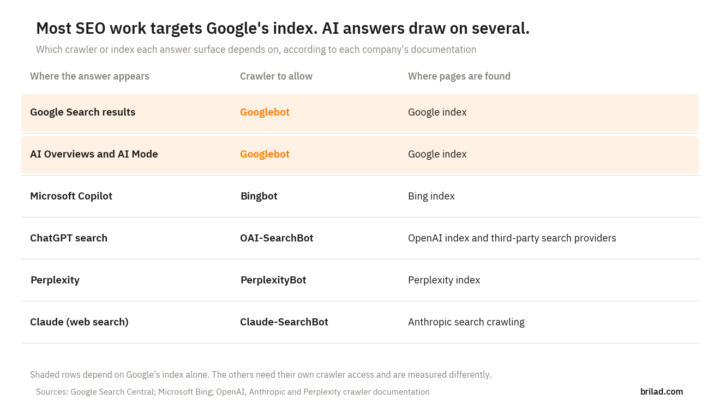
What really changes when you move from SEO to generative engine optimisation, what stays the same, and where to start, based on documentation from Google and OpenAI and published studies.
Gunakesh Parmar ·
The trust signals a business website should show, the ones that reduce trust, and how to offer risk reversal without false guarantees.
How knowledge graphs store facts as nodes and edges, how Google's Knowledge Graph and Wikidata work, and how to get your business represented.
Why HTML tables and data-dense writing help search engines and AI assistants quote you accurately, and how to build tables machines can read.
What first-party evidence and original research are, why AI assistants cite them, and how a services business can publish its own data properly.
How visible dates, dateModified and sitemap lastmod work as freshness signals, what Google says about them, and when to update a page's date.
Why AI assistants state false things even when citing sources, what hallucinations look like for a business, and how to find and fix them.
What E-E-A-T means in Google's rater guidelines, why it matters to AI assistants, and a practical checklist for business websites.
How search engines and AI systems decide that mentions refer to your company, and how consistent naming, sameAs and Wikidata fix confusion.
What llms.txt is, its format, who uses it, what it can and cannot do for AI visibility, and how to add it to WordPress.
Answer-first structure, chunking, tables, JSON-LD, entity resolution, llms.txt, AI crawler rules, freshness dates and IndexNow.
Retrieval-augmented generation, query fan-out, embeddings, re-ranking, context windows, the lost-in-the-middle effect and AI hallucination.
Guides on how Google, answer engines and AI assistants find, read and choose the sources they show.
A full check of your visibility across Google, answer engines and AI assistants, with a prioritised fix list.
Generative Engine Optimization: AI crawler access, entity grounding, citable content and AI citation tracking for ChatGPT, Perplexity and Gemini.
Technical and enterprise SEO: crawl health, Core Web Vitals, site architecture and intent-based keyword mapping.
SEO, AEO and GEO services, AI Search Audits and AI-ready development on WordPress, Next.js and Laravel.
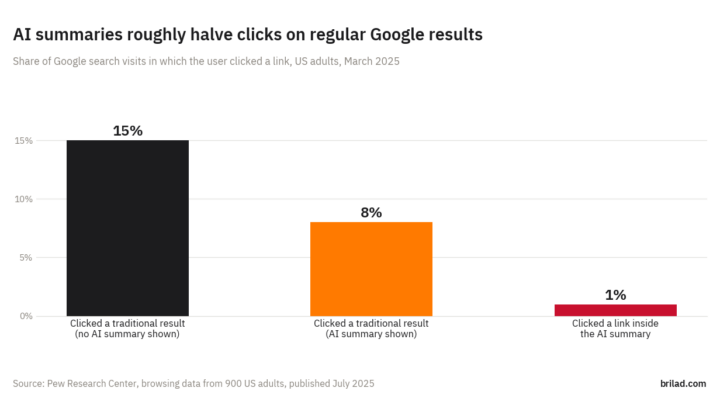
What changes in answer engine and generative engine optimisation for B2B software, e-commerce, healthcare, financial services and market research publishers, based on documented guidance and published research.
Gunakesh Parmar ·
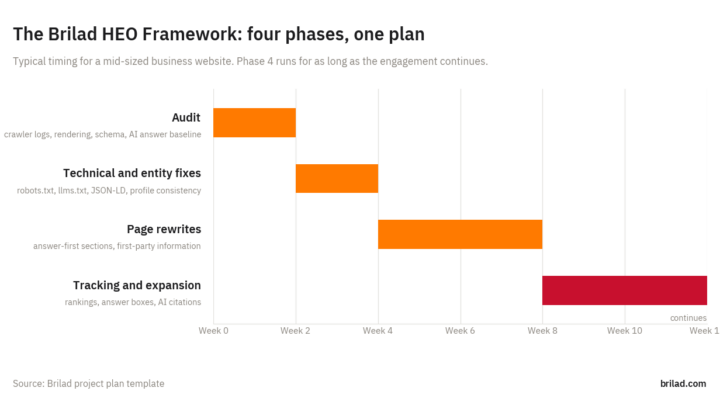
How Brilad plans SEO, answer engine optimisation and generative engine optimisation as one four-phase process, what each phase covers, and what it cannot promise.
Gunakesh Parmar ·